







Planning a Tanzania safari in 2026 usually starts with the exciting questions: Which parks should you visit? Will you see the Great Migration? Should you combine Serengeti with Ngorongoro and Zanzibar? What kind of lodge should you choose?
Then there is the less glamorous part of the journey: entry requirements.
From 1 October 2026, Tanzania has implemented mandatory inbound travel insurance for eligible foreign visitors entering Mainland Tanzania. Zanzibar already had its own mandatory inbound insurance requirement from October 2024. The important point for travellers is that the insurance is now part of the practical arrival process, alongside documents such as your passport and visa. Embassy of Tanzania
For someone preparing a safari, this is easy to overlook because travel insurance is normally something you arrange for protection rather than something directly connected to immigration. Tanzania’s 2026 system changes that distinction.
The good news is that the rule itself is relatively straightforward once you understand one principle:
Your first point of entry into Tanzania determines which mandatory inbound insurance you need.
What is the Tanzania mandatory travel insurance requirement for 2026?
Under the Insurance (Inbound Travel Insurance) Regulations, 2026, published through Government Notice No. 256 of 2026, eligible foreign visitors entering Mainland Tanzania through an airport, seaport or land border are required to hold valid inbound travel insurance. The regulations were published on 4 September 2026, with implementation beginning on 1 October 2026. Embassy of Tanzania
The official implementation notice from the Tanzanian government states that the National Insurance Corporation, or NIC, is the designated provider for visitors entering through Mainland Tanzania, while the Zanzibar Insurance Corporation, or ZIC, is designated for visitors entering through Zanzibar. Embassy of Tanzania
The standard premium is USD 44 per visitor, payable in Tanzanian shillings, and the policy can remain valid for up to 92 days from the date of arrival. Embassy of Tanzania
This matters particularly for safari travellers because a typical Tanzania itinerary can involve several locations and different forms of transport. A traveller may fly into Kilimanjaro International Airport, spend several days around Arusha, drive through Tarangire, continue to Ngorongoro and Serengeti, and then fly to Zanzibar.
The insurance question therefore needs to be solved at the beginning of the journey, not destination by destination.
Who needs mandatory travel insurance in Tanzania?
The mainland regulations apply to eligible foreign visitors entering Tanzania Mainland through:
- International airports
- Seaports
- Land borders
The regulations define a foreigner as someone who is not a citizen of the United Republic of Tanzania, while excluding residents of East African Community and Southern African Development Community partner states from the definition for this requirement. Clyde & Co
This distinction is important.
A traveller should not simply assume that every person carrying a foreign passport has exactly the same requirement. Eligibility depends on the applicable regulations and exemptions.
For the ordinary international safari traveller coming from Europe, North America, Asia, Australia or other markets outside the applicable EAC and SADC exemptions, the mandatory inbound insurance should be treated as part of the Tanzania arrival checklist.
If you are unsure whether your nationality or residence status falls under an exemption, check the current official guidance before travelling rather than relying on an old blog post.
How much does Tanzania mandatory travel insurance cost in 2026?
For Mainland Tanzania, the government has set the premium at the equivalent of USD 44 per visitor. The premium is payable in Tanzanian shillings through the designated payment system. Clyde & Co
The policy is valid for up to 92 days and allows multiple entries during its validity period under the mainland regulations. A visitor who remains in Mainland Tanzania beyond the validity period must obtain a new policy. Clyde & Co
There is an important practical distinction here.
The USD 44 mandatory policy should not automatically be treated as a replacement for the comprehensive travel insurance you may already have from your home country.
These serve different purposes.
The Tanzanian inbound policy is an entry requirement with defined benefits, limits and terms. Your own comprehensive travel insurance can provide additional protection according to its own policy, including areas that matter greatly for a longer safari, adventure activity or complex international itinerary. The official travel guidance also recommends having insurance that covers your individual needs. GOV.UK
That is why an experienced traveller should think about insurance in two layers:
Mandatory Tanzania inbound insurance for entry.
Comprehensive personal travel insurance for the wider journey.
One does not necessarily make the other unnecessary.
What does the mandatory Tanzania insurance cover?
The 2026 mainland regulations specify four core categories of benefits:
- Emergency medical treatment
- Emergency medical evacuation
- Emergency repatriation
- Loss of luggage
The exact limits and applicable benefits are set out in the policy issued to the traveller. Clyde & Co
This is especially relevant to a Tanzania safari.
A safari is not simply a city holiday where the traveller is always a short taxi ride from a major hospital. The itinerary may take you deep into national parks, across long distances and into areas where access to medical facilities can take time.
That is why emergency evacuation is not just technical language on an insurance document. It is one of the practical considerations travellers should understand before entering the bush.
At the same time, travellers should read the policy conditions rather than assuming that every medical situation, activity or expense is automatically covered. Insurance policies have exclusions, limits and conditions. The official NIC guidance specifically emphasizes understanding the policy terms and conditions. NICTanzania
Which insurance should you buy: NIC or ZIC?
This is where many travellers can become unnecessarily confused.
The simple rule is:
| First point of entry into Tanzania | Mandatory inbound insurance |
|---|---|
| Mainland Tanzania | NIC |
| Zanzibar | ZIC |
If your international flight lands at Kilimanjaro International Airport, Julius Nyerere International Airport, Arusha Airport, or another mainland entry point, your mandatory inbound policy is obtained through NIC.
NIC Mainland Tanzania Inbound Travel Insurance
If you arrive in Zanzibar first, the designated provider is ZIC.
ZIC Zanzibar Inbound Travel Insurance
The official Tanzanian implementation notice confirms that NIC and ZIC are the designated providers for Mainland Tanzania and Zanzibar respectively. Embassy of Tanzania
What if your trip includes both Tanzania Mainland and Zanzibar?
This is one of the most useful points for safari travellers.
Suppose your itinerary looks like this:
Europe → Kilimanjaro → Arusha → Tarangire → Ngorongoro → Serengeti → Zanzibar → Europe
Your first entry into Tanzania is Mainland Tanzania.
Therefore, your mandatory inbound insurance is obtained through NIC.
You do not start buying another mandatory policy simply because your itinerary later moves to Zanzibar. Current official guidance states that only the insurance corresponding to the first point of entry is required for the combined journey, subject to the applicable policy terms. NICTanzania
Now reverse the itinerary:
Europe → Zanzibar → Tanzania Mainland → Serengeti → Kilimanjaro Airport → Europe
Your first point of entry is Zanzibar.
Therefore, you obtain the mandatory inbound insurance through ZIC.
This first-entry principle is one of the most important pieces of information to understand when building a Tanzania and Zanzibar itinerary.
Why this matters when planning a Tanzania safari
A good safari itinerary is not only about the parks.
It is also about how the journey fits together.
When we plan a Tanzania safari, the logical questions are not limited to whether Serengeti or Ngorongoro should come first. We also have to think about the arrival airport, domestic flights, road transfers, Zanzibar extensions, border procedures and the documents the traveller will actually need.
This is where small administrative details can become important.
Imagine a traveller has spent months planning a once-in-a-lifetime Serengeti safari. Their lodge is booked, their flights are confirmed, their camera equipment is packed and their safari vehicle is waiting.
Then they arrive at the entry point without the required inbound insurance.
The problem is not the safari itself. The problem is that a document that could have been handled before departure has now become an arrival issue.
The Tanzanian government specifically advises international travellers to arrange the required inbound insurance before travelling in order to facilitate entry procedures and avoid unnecessary inconvenience or delays. Embassy of Tanzania
For a professional safari operator, this is exactly the kind of detail that should be addressed before the client leaves home.
Do you still need your own travel insurance if you buy the USD 44 policy?
Yes, travellers should still consider comprehensive personal travel insurance.
The mandatory inbound policy is not a reason to cancel the travel insurance you would normally purchase for an international trip.
Think of the mandatory policy as a Tanzania entry requirement, not necessarily as a complete replacement for the insurance package designed around your entire journey.
For example, depending on your own policy, you may want protection for:
- Trip cancellation
- Trip interruption
- Missed connections
- Personal belongings
- Broader medical expenses
- Activities with specific insurance requirements
- Additional evacuation arrangements
- Travel disruption outside Tanzania
The appropriate cover depends on your circumstances and the terms of the insurance policy.
This distinction becomes particularly important for travellers climbing Mount Kilimanjaro or participating in activities where the operator requires specific insurance coverage. The mandatory inbound policy should not be assumed to automatically satisfy every separate insurance requirement associated with an activity.

When should you buy Tanzania mandatory travel insurance?
The practical answer is: before you travel.
The regulations allow the mainland policy to be purchased before travel or upon arrival at the point of entry. Clyde & Co
However, the Tanzanian government’s own public notice strongly encourages travellers to arrange the insurance before travelling to make entry procedures smoother. Embassy of Tanzania
That is the sensible approach.
When your international flight lands, you want your attention on immigration, luggage, your driver or guide and the beginning of your Tanzania experience.
You do not want to spend the first minutes of your safari trying to solve an avoidable administrative problem.
For that reason, we recommend treating the insurance certificate like your passport, visa documentation and flight information.
Keep it:
- On your phone
- In your email
- In your travel documents
- Available for verification when requested
The mainland regulations require the insurer to issue the certificate and policy in electronic or hard-copy form after payment. Clyde & Co
What happens if you arrive without the required insurance?
This is not something to leave until the last minute.
The 2026 mainland regulations state that a foreigner entering Mainland Tanzania without the required valid inbound travel insurance shall be denied entry. Clyde & Co
That is why this requirement deserves the same attention as your visa.
The government has made the process available before travel and at points of entry, but pre-arranging it removes an unnecessary variable from your arrival.
There is a wider lesson here for safari planning: the best itineraries are rarely the ones with the most complicated schedules. They are the ones where the important details have already been handled before the traveller arrives.
Tanzania mandatory insurance and the Tanzania visa are not the same thing
This distinction is worth making very clearly.
A visa is immigration authorization for eligible travellers to travel to and seek entry into Tanzania.
Mandatory inbound travel insurance is an insurance requirement connected to entry.
They are separate requirements.
Tanzania Immigration’s official visa guidance states that a visa is an authorization enabling a foreigner to travel and present themselves for entry clearance, while other entry conditions still apply at the point of arrival. Visa Tanzania
So having an approved Tanzania eVisa does not mean you should ignore the mandatory insurance requirement.
Likewise, having travel insurance from your home country does not automatically remove the separate Tanzania inbound insurance requirement where it applies. Current official guidance states that the mandatory inbound policy remains required even where a traveller already holds another travel or medical insurance policy. Zanzibar Insurance Corporation
What safari travellers should do before flying to Tanzania
A useful pre-departure checklist for a 2026 Tanzania safari is:
Passport: Make sure it meets Tanzania’s entry requirements.
Visa: Check whether your nationality requires a visa and arrange it through the official Tanzania Immigration system where applicable. Visa Tanzania
Mandatory inbound insurance: Determine your first point of entry and obtain the appropriate NIC or ZIC policy.
Insurance certificate: Keep a digital and accessible copy.
Comprehensive travel insurance: Maintain appropriate personal cover for the wider journey and planned activities.
Safari itinerary: Keep your accommodation, transfers, domestic flights and tour operator information accessible.
Return or onward ticket: Tanzania’s immigration guidance states that visitors may be required to show an onward or return ticket. Tanzania Government Portal
Emergency information: Keep important contacts accessible rather than buried inside your luggage.
These may look like small administrative steps.
They are not.
A safari begins long before the first lion appears through the vehicle window.
A practical example: a 10-day Tanzania safari followed by Zanzibar
Consider a traveller booking a 10-day northern Tanzania safari with a Zanzibar beach extension.
They fly from Europe to Kilimanjaro International Airport.
Their route is:
Kilimanjaro Airport → Arusha → Tarangire → Ngorongoro → Serengeti → Arusha → Zanzibar
Because the traveller enters Tanzania through the Mainland first, they obtain the mandatory inbound insurance through NIC.
The policy can be valid for up to 92 days, and the traveller can then continue to Zanzibar as part of the same Tanzania journey, subject to the applicable policy terms. Embassy of Tanzania
They do not need to approach the trip as though Tanzania Mainland and Zanzibar were two completely unrelated insurance journeys.
Now imagine the traveller changes the flight.
Instead of landing at Kilimanjaro, they fly directly into Zanzibar, spend four nights on the island and then continue to Arusha for their safari.
The first entry point has changed.
Therefore, the appropriate mandatory inbound provider changes from NIC to ZIC.
That is why the first question we ask when looking at the insurance requirement is not simply, “Are you going to Tanzania?”
“Where are you entering Tanzania first?”
That single detail determines the correct starting point for the mandatory insurance process.

What travellers should know about the 92-day validity
The 92-day period is another detail that deserves attention.
For Mainland Tanzania, the inbound policy is valid for a maximum of 92 days from arrival and can accommodate multiple entries during the validity period. A traveller staying beyond that period needs a new policy. Clyde & Co
For most safari holidays, this will be more than sufficient.
A typical safari may last several days or a few weeks, sometimes followed by Zanzibar or another regional destination.
But travellers planning extended stays should not assume that the initial policy continues indefinitely.
Always check the dates shown on your actual certificate.
The most important mistake to avoid
The biggest mistake is not failing to understand the price.
It is assuming that because you already have “travel insurance,” you have automatically satisfied Tanzania’s mandatory inbound insurance requirement.
Those are two different questions.
Do I have travel insurance?
And:
Do I have the Tanzania-mandated inbound travel insurance required for my first point of entry?
For eligible foreign visitors, the second question needs a clear answer.
The official Zanzibar Insurance Corporation explicitly states that its mandatory inbound insurance remains required even when a traveller already has valid travel or medical insurance from another provider. Zanzibar Insurance Corporation
For travellers entering Mainland Tanzania, the current official guidance similarly directs them to the NIC inbound insurance system. Embassy of Tanzania
Final Tanzania travel insurance checklist for 2026
Before departing for your Tanzania safari, make sure you can answer all of these:
Am I subject to the mandatory inbound insurance requirement?
Where is my first point of entry into Tanzania?
Am I entering through Mainland Tanzania or Zanzibar?
Have I obtained the correct policy from NIC or ZIC?
Do I have my insurance certificate accessible?
Is my policy valid for the complete period of my stay?
Do I also have comprehensive personal travel insurance for the wider trip?
Does my personal policy cover the activities I plan to undertake?
If the answers are clear, one of the newer Tanzania entry requirements becomes much easier to manage.
The official channels are the safest place to complete the process:
NIC Official Mainland Tanzania Inbound Travel Insurance Portal
ZIC Official Zanzibar Inbound Travel Insurance Portal
Planning a Tanzania safari in 2026?
The mandatory travel insurance requirement is only one part of preparing for Tanzania.
The bigger decision is building an itinerary that makes sense for the season, your arrival point, the parks you want to visit, the amount of time available and the type of experience you actually want.
A safari that looks impressive on paper can still be poorly designed if too much of the trip is spent driving between destinations.
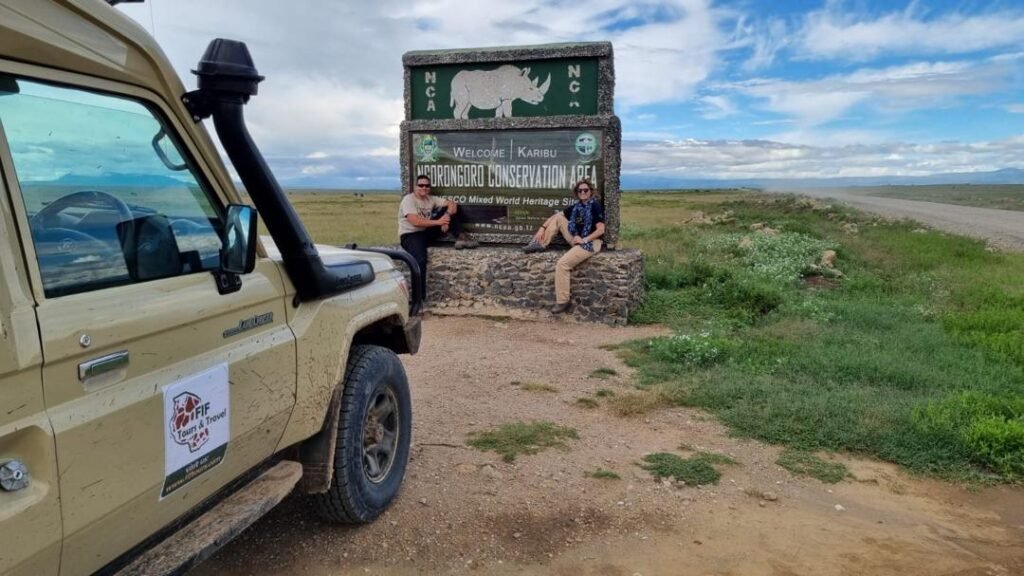
At FIF Tours & Travel, safari planning starts with understanding the traveller’s actual priorities and then connecting the right destinations, timing and logistics around them.
Whether the journey is focused on the Serengeti and Great Migration, Ngorongoro, Kilimanjaro, Tarangire, a northern Tanzania circuit or a safari followed by Zanzibar, the small logistical details matter because they shape how smoothly the entire experience unfolds.
In 2026, mandatory inbound travel insurance is now part of that preparation.
Handle it before departure, keep the certificate accessible, understand the difference between mandatory inbound cover and your own comprehensive travel insurance, and make sure the policy matches your first point of entry.
Then you can get back to the part of Tanzania that brought you here in the first place: the wildlife, the landscapes, the people, and the feeling of being somewhere genuinely different.
Frequently Asked Questions
Is travel insurance mandatory for Tanzania in 2026?
For eligible foreign visitors entering Mainland Tanzania, mandatory inbound travel insurance applies from October 1, 2026. The standard premium is the Tanzanian shilling equivalent of USD 44 and the policy is valid for up to 92 days
Do I still need Tanzania’s mandatory insurance if I already have travel insurance?
Yes, having separate travel insurance does not by itself remove the Tanzania inbound insurance requirement where it applies. The mandatory policy is a separate entry requirement, while comprehensive personal travel insurance can provide broader protection according to its own terms.
Does the USD 44 Tanzania insurance replace comprehensive travel insurance?
Not necessarily. The mandatory inbound policy is designed around the Tanzanian entry requirement and its specified benefits. Travellers should still consider comprehensive personal travel insurance appropriate to their itinerary, particularly where they have additional medical, cancellation, activity or evacuation needs.
What is the biggest mistake travellers make with Tanzania’s new insurance requirement?
The most important mistake is confusing having travel insurance with having the Tanzania-mandated inbound insurance. They are not automatically the same thing. The other major mistake is choosing the wrong provider by ignoring the itinerary’s first point of entry.
What happens if I fly to Dar es Salaam first and then continue to Zanzibar?
If you formally enter Tanzania through Dar es Salaam first, Mainland Tanzania is your first point of entry, so the applicable inbound insurance is the NIC policy. Continuing to Zanzibar later does not mean you automatically need to purchase a second mandatory policy.