Standing in solitude above the African plains, Mount Kilimanjaro is not just a peak — it’s a powerful personal revelation.
Rising 5,895 meters into the sky, Kilimanjaro is the tallest free-standing mountain in the world — but what truly sets it apart isn’t its height. It’s the journey. The soul-stirring silence of its slopes. The way the air changes with every step. The transformation that happens within.
For centuries, Kilimanjaro has whispered to explorers, wanderers, and seekers — not just of landscapes, but of purpose. Whether you’re drawn by its rare ecological zones, the mystic pull of its ancient glaciers, or the achievement of summiting Africa’s highest point, this mountain offers more than a climb — it offers awakening.
Here, altitude becomes attitude.
Here, nature becomes mentor.
Here, the mountain becomes a mirror.
This is why people from all corners of the Earth — from seasoned climbers to first-time trekkers, from luxury adventurers to spiritual pilgrims — choose Kilimanjaro. Not to conquer it, but to meet themselves on its sacred slopes.
So… why go to Kilimanjaro?
Because deep down, you know it’s calling.
There are mountains that you climb — and there are mountains that awaken you.
Mount Kilimanjaro is not just Africa’s tallest mountain — it is a continent’s crown, rising majestically above the clouds at 5,895 meters. But beyond the numbers lies a sacred presence that commands both reverence and wonder.
It is the world’s tallest free-standing mountain, not part of any range — a geological wonder that quite literally stands alone.
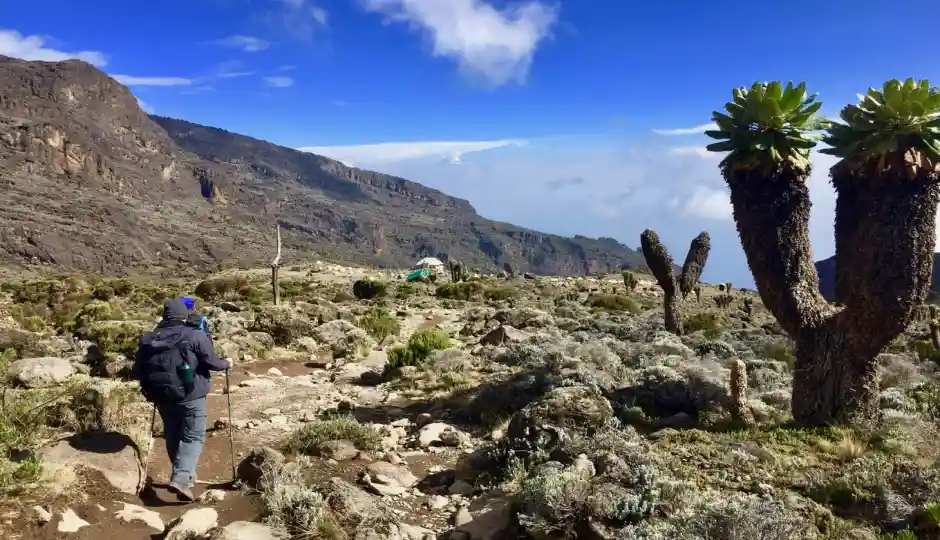
It offers five distinct ecological zones, from tropical rainforest to alpine desert to arctic glacier — a journey through Earth’s climates in one continuous ascent.
No technical climbing gear is required — making it the most accessible high-altitude trek on Earth, yet spiritually one of the most profound.
But Kilimanjaro’s true majesty isn’t found only in statistics — it’s in the feeling:
The deep hush of pre-dawn starts above the clouds.
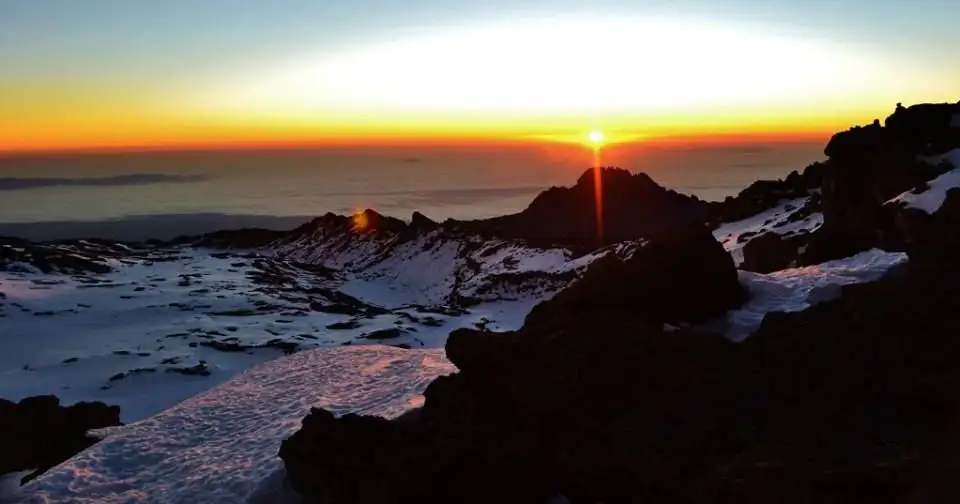
The slow-motion sunrise over the African savannah, viewed from Stella Point.
The timeless dance of mist around the Shira Plateau, or the haunting silence of the glacier walls at Uhuru Peak.
It is this combination of natural grandeur, personal transformation, and global significance that places Kilimanjaro in a league of its own — not just as a tourist attraction, but as a global pilgrimage site.
“Climbing Kilimanjaro is not about conquering a summit — it’s about surrendering to something greater.”
Climbing Mount Kilimanjaro is not a simple tick on a bucket list — it’s a sacred journey, a personal rite of passage, and a world-class trekking experience wrapped into one.
Unlike Everest or K2, Kilimanjaro doesn’t require technical climbing. It’s one of the few world wonders you can hike without ropes or ice axes — making it perfect for first-time trekkers, families, and adventure seekers alike.
Where else can you start in lush equatorial forest, trek through moorlands and alpine deserts, and stand on a glacier at the summit — all within a few days? Kilimanjaro is Earth’s climate museum in one vertical trail.
Uhuru Peak (5,895m) isn’t just a summit — it’s a symbol of Africa’s soul. Standing there, at the Roof of Africa, you don’t just see the continent… you feel it breathe beneath your boots.
Kilimanjaro is not just a climb — it’s a mirror. It reflects your spirit, endurance, and mindset. Reaching the summit becomes a deeply transformative experience, physically and spiritually.
From celebrities to scientists, CEOs to students, Kilimanjaro attracts global dreamers who seek more than just views — they seek meaning. Climbing Kili is a badge of honor recognized across the world.
Your Kilimanjaro adventure fuels local employment, supports eco-protection, and uplifts communities through sustainable tourism. You’re not just climbing a mountain — you’re empowering a nation.
When people ask, “Is climbing Kilimanjaro really worth it?” — what they’re really asking is:
“Is the time, money, and effort worth the magic I’ll experience?”
And the answer, from every soul that’s stood at Uhuru Peak with tears in their eyes, is a powerful: Yes. Absolutely. Forever.
No ropes. No mountaineering experience. Just mental resilience, a good guide, and the will to walk. Kilimanjaro is the highest point on Earth that most people will ever physically touch — and it’s accessible.
From sunrise over Mawenzi, to standing above the clouds watching the world curve… these moments are not just seen — they’re felt.
Many don’t just climb Kilimanjaro to say they did — they climb to heal, to grow, to prove something to themselves. You arrive at the summit a different person than the one who started the journey.
Your team of local porters, guides, and chefs become a second family. Their songs, their strength, their smiles — they shape your story. You don’t just climb a mountain. You connect with the heart of Tanzania.
From school fees in Moshi to conservation on the mountain, your trek directly fuels the Tanzanian ecosystem. Your experience becomes a ripple of impact.
High-value travel experience for personal growth
Popular among luxury and conscious travelers
Bucket list-level bragging rights
No technical gear = lower risk
Ethical trekking = positive impact

Different Kilimanjaro Routes (And Which is Best)
— For Climbers Who Want More Than Just a Path —
Each Kilimanjaro route is like a different story, a different way to meet the mountain. Some are romantic, some ruthless, others royal. Your route defines how your journey unfolds, and which version of Kilimanjaro reveals itself to you.
Let’s break them down — human to human, truthfully, with clarity and power.
Best for: Adventurers who want a scenic, challenging climb with high success rates.
Vibe: Dramatic landscapes, switchbacks, forest to glaciers.
Duration: 6–7 days
Why choose it?
Excellent acclimatization profile (climb high, sleep low)
Incredible views through all climate zones
Popular, so expect company
Balanced between challenge and beauty
Verdict: Most popular for a reason. Ideal for photographers, adventure seekers, and first-timers who want challenge + reward.
Best for: Those who want a quiet, immersive, and luxurious ascent.
Vibe: Remote, lush rainforest, less traffic, gradual elevation.
Duration: 7–8 days
Why choose it?
Highest summit success rate
Wild, pristine campsites
Great for slow climbers and altitude prep
Less crowded than Machame
Verdict: If you’re seeking the ultimate Kilimanjaro experience with fewer people and higher odds of reaching the top, this is the king’s road.
Best for: Budget travelers or those preferring hut accommodations.
Vibe: More social, direct, and predictable.
Duration: 5–6 days
Why choose it?
Only route with hut stays (no tents!)
Fewer scenic changes
Lower success rate due to fast ascent
Verdict: Great for groups who want simplicity. Less wild, more practical. Expect crowds.
Best for: Those climbing in rainy seasons or seeking solitude.
Vibe: Dry, remote, and peaceful.
Duration: 6–7 days
Why choose it?
Less crowded
Approaches from northern Kenya side
Views of Mawenzi Peak
Gentle gradient, but less scenic overall
Verdict: Ideal if you want a quiet and dry route, or are climbing during wet seasons.
Best for: Ultimate adventurers and serious summit planners.
Vibe: The longest, most secluded journey.
Duration: 9–10 days
Why choose it?
Highest acclimatization opportunity
Full 360-degree traverse of Kilimanjaro
Extremely high summit success rate
Low traffic
Verdict: If time, budget, and patience allow — this is the route of legends.
Best for: Hardcore climbers and fitness junkies.
Vibe: Steep, tough, technical.
Duration: 5–6 days
Why choose it?
Direct but brutal
Very low summit success rate
Little acclimatization time
Fewer people
Verdict: Only for experienced climbers who know what they’re doing — or those chasing pain 😅.
There’s no single answer. But here’s a fast guide based on who you are:
| If you are… | Go with… |
|---|---|
| A first-timer who wants balance | Machame |
| A photographer or nature lover | Lemosho |
| Traveling during rainy season | Rongai |
| On a tighter budget | Marangu |
| An elite endurance seeker | Northern Circuit |
| A madman on a mission 😅 | Umbwe |
Embark on an epic journey to the roof of Africa with our Kilimanjaro Routes. Choose your path, whether it’s the challenging Machame Route or the scenic Marangu Route. Each route offers a unique adventure, showcasing the diverse landscapes and captivating beauty of Kilimanjaro. Get ready to conquer this iconic peak, guided by experienced experts who will make your ascent an unforgettable experience.
FIF Tours and Travel
Typically replies within minutes
Any questions related to Why Go?
WhatsApp Us
🟢 Online | Privacy policy
WhatsApp us