




There are moments in Africa when the wilderness reveals more than its beauty. It reveals how life begins, how survival works and how every species is connected to the next.
One of those moments happens every year in the southern part of Tanzania’s Serengeti ecosystem.
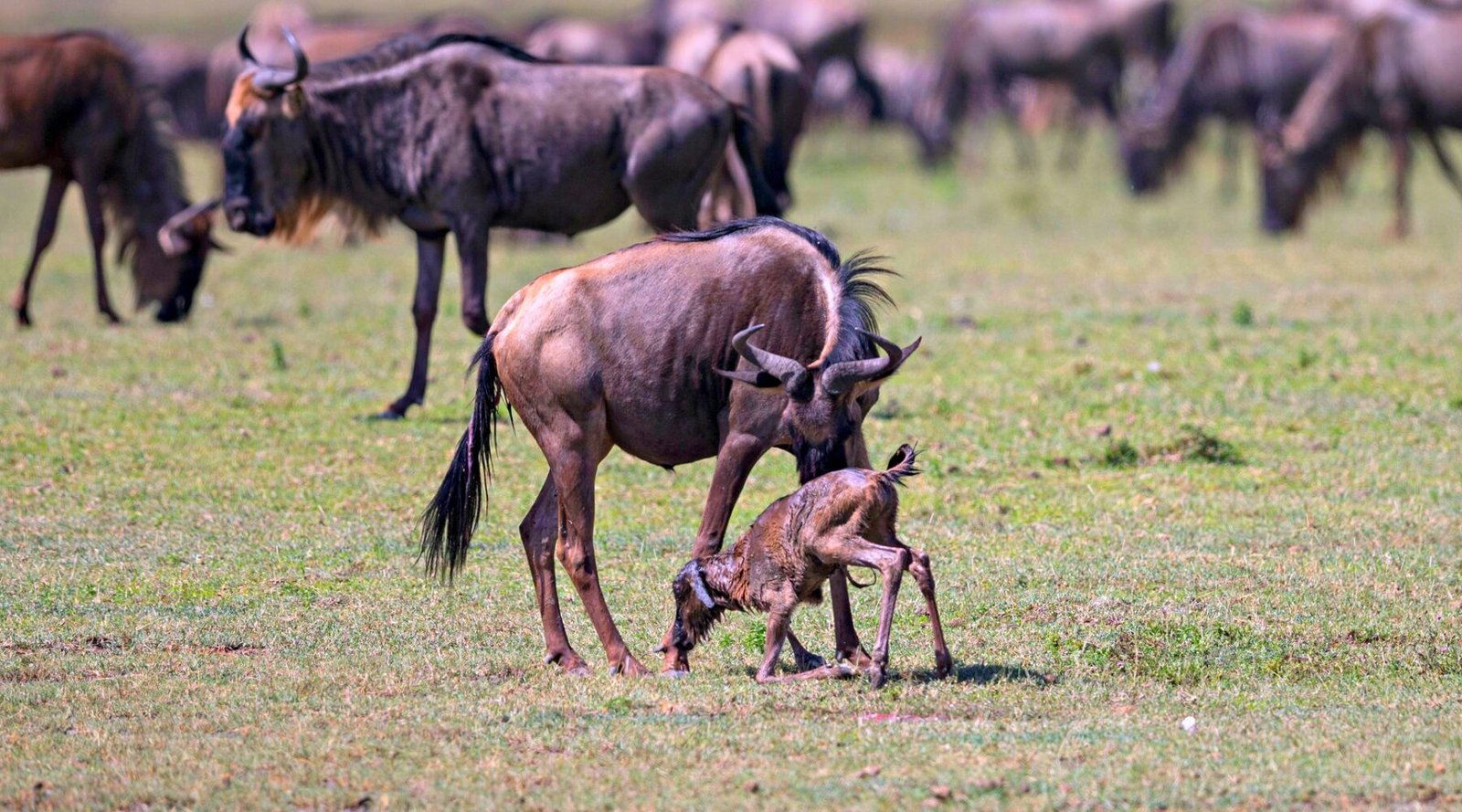
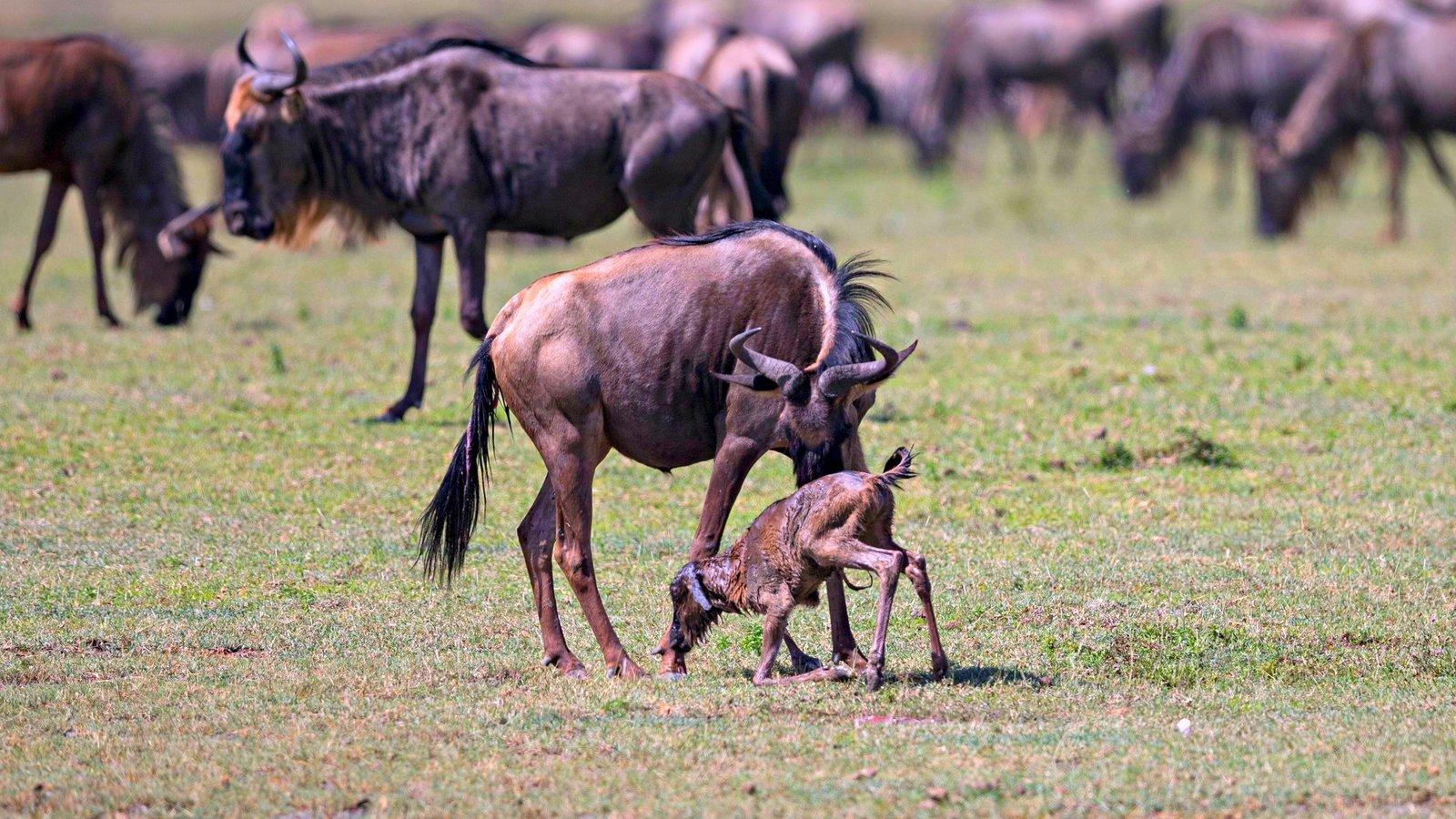
Between January and March, the plains around Ndutu become one of the most important wildlife breeding grounds in East Africa. Huge herds of wildebeest gather across the short-grass plains, and hundreds of thousands of calves are born within a relatively short period. The arrival of these newborn animals also attracts predators, creating remarkable opportunities to observe the natural relationships between prey and predator.
This is the Ndutu Calving Season, one of the most compelling periods to experience the Great Wildebeest Migration in Tanzania.
Unlike the famous Mara River crossings, which attract attention during the dry season, Ndutu offers a different perspective on the migration. Here, the focus shifts from crossing rivers to the beginning of new life.
For travellers planning a Tanzania safari, understanding when to visit, where to stay and how long to spend in this region can make a significant difference to the experience.
At FIF Tours & Travel, we recommend planning around the seasonal movement of wildlife rather than choosing travel dates based on a calendar alone.
1. What Is the Ndutu Calving Season?
The Ndutu Calving Season is the annual period when large numbers of wildebeest give birth across the Southern Serengeti plains, particularly around the Ndutu area and its surrounding grasslands.
It forms part of the larger Great Wildebeest Migration involving approximately 1.5 million wildebeest, alongside hundreds of thousands of zebras and other grazing animals.
The southern plains are especially important because their short grasses provide nutritious grazing for pregnant wildebeest and nursing mothers. Seasonal rainfall encourages fresh vegetation, creating favourable feeding conditions for the herds.
The concentration of animals during this period is extraordinary. TANAPA’s 2026 tourism publication describes more than half a million wildebeest giving birth over a few weeks, while established migration references report peak daily births of approximately 8,000. Tanzania Parks+2
However, calving is not simply about the number of newborn animals.
It is also about the survival strategy of the wildebeest. By giving birth in a concentrated period, the herds increase the chances that individual calves will survive despite the presence of predators.
For visitors, this creates an exceptional opportunity to witness a complete wildlife ecosystem in action.
2. When Is the Best Time to Visit Ndutu for Calving Season?
The Ndutu Calving Season generally takes place between December and March, with January and February being the most important months for visitors interested in newborn wildebeest.
February is usually considered the peak month, although the exact timing and concentration of herds depend on rainfall and pasture conditions.
Ndutu Calving Season Month by Month
| Month | What to expect |
|---|---|
| December | Herds begin gathering in the southern plains. Early calves may appear towards the end of the month. |
| January | Calving activity increases as the herds spread across Ndutu and neighbouring plains. |
| February | Main calving period, with large numbers of newborn wildebeest and strong predator activity. |
| March | Calving continues in some areas, although the herds may gradually begin moving away from the southern plains. |
Is February the Best Month for Ndutu Calving Season?
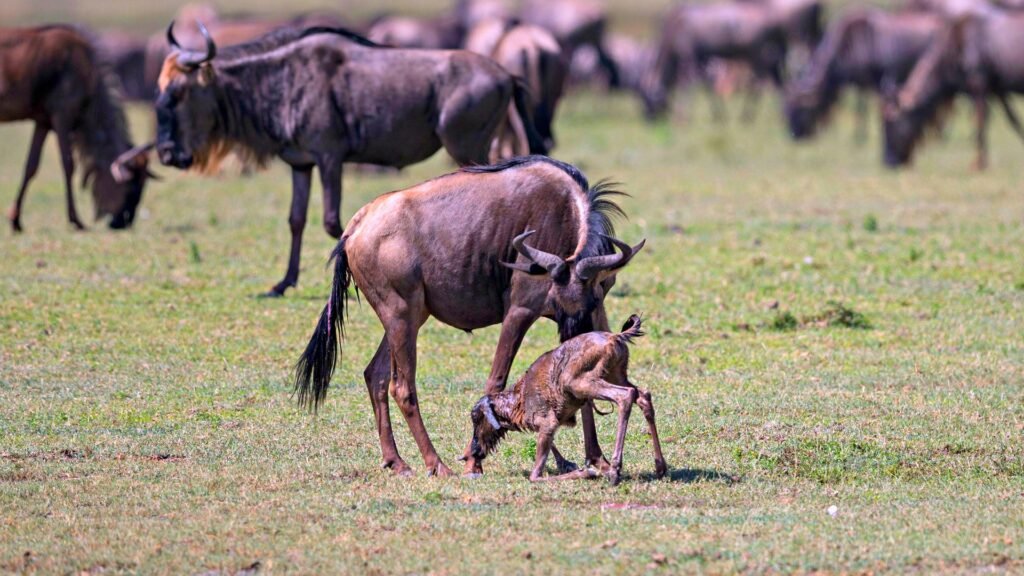
For travellers whose main objective is to see newborn wildebeest and the associated predator activity, February is generally the strongest recommendation.
During this period, visitors may encounter:
- Large herds of wildebeest spread across open grasslands.
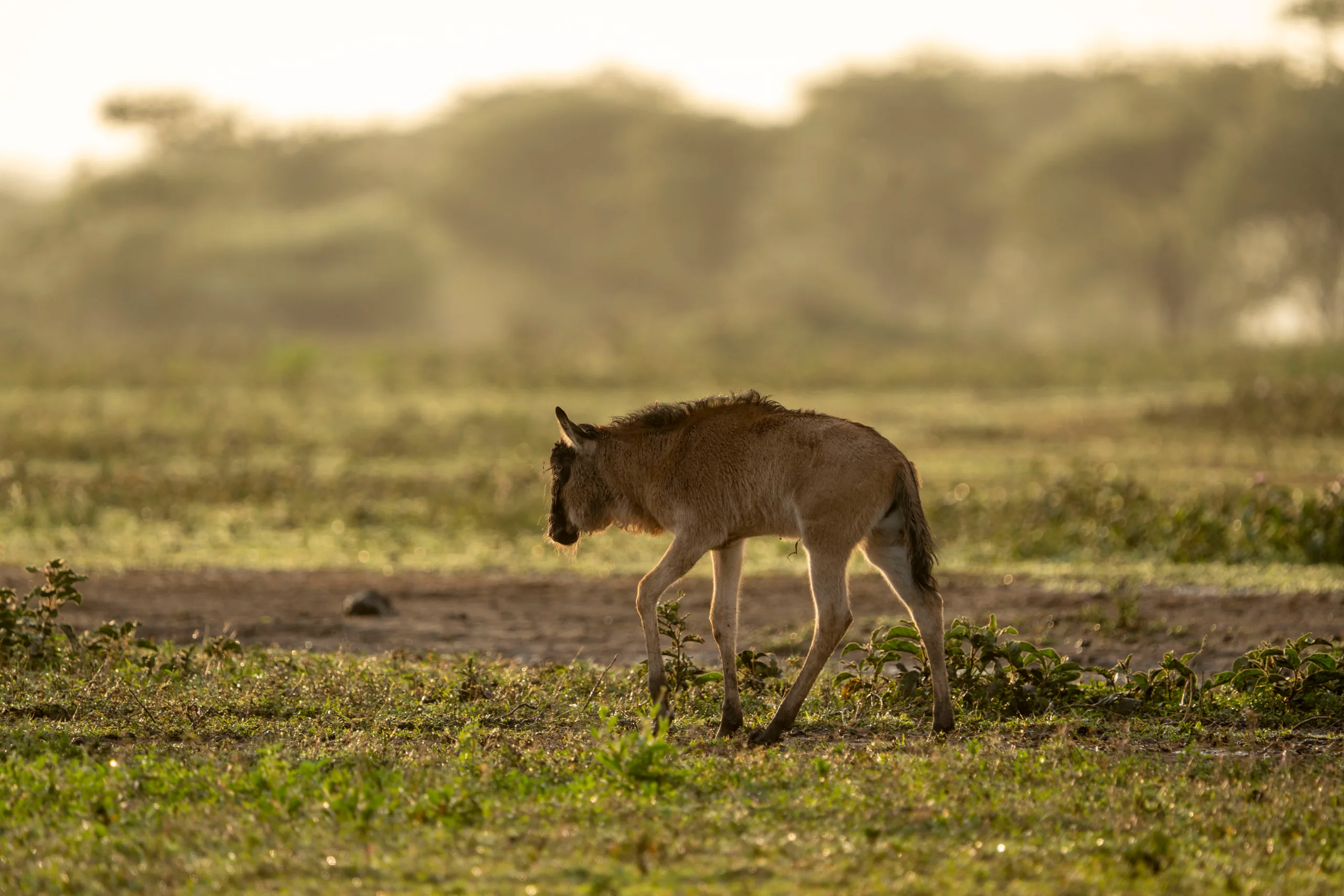
- Newborn calves learning to stand and follow their mothers.
- Lions moving through areas occupied by the herds.
- Cheetahs hunting across the open plains.
- Spotted hyenas searching for opportunities around vulnerable young animals.
- Excellent landscape photography opportunities following seasonal rainfall.
However, February is not the only worthwhile month. January offers the opportunity to experience the build-up of calving activity, while March can still provide rewarding sightings.
The important point is that wildlife does not follow an exact timetable. No responsible safari operator should guarantee a particular birth, predator encounter or herd location on a specific date.
3. Where Is Ndutu Located in Tanzania
Ndutu is located in northern Tanzania, within the southern Serengeti ecosystem, close to the boundary between Serengeti National Park and the Ngorongoro Conservation Area.
It is an important seasonal wildlife area because it connects the southern Serengeti plains with the western part of the Ngorongoro Conservation Area.
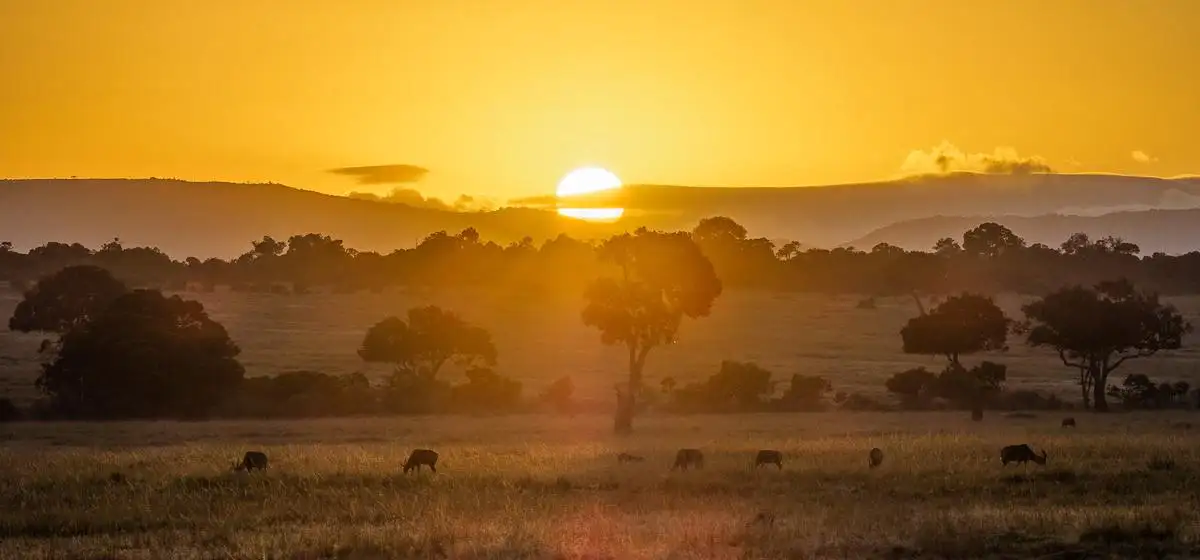
The wider Ndutu landscape includes open short-grass plains, seasonal lakes, woodland areas and distinctive rocky outcrops.
This variety of habitats supports different wildlife species and creates several opportunities for game viewing.
During the calving season, the open plains become particularly important because large herds of wildebeest and zebras concentrate in the area.
Ndutu and the Southern Serengeti
Ndutu should not be understood as an isolated destination separate from the Serengeti migration.
It forms part of a much larger ecosystem where wildlife moves according to rainfall, grass availability and water conditions.
This is why choosing the correct safari location is important. Staying close to the seasonal concentrations of wildlife can reduce unnecessary driving and allow more time for game viewing.
4. What Wildlife Can You See During Ndutu Calving Season?
One of the reasons Ndutu is so attractive to wildlife enthusiasts is the concentration of different animal species within the same landscape.
Although wildebeest are the main attraction during calving season, the surrounding plains support a much wider range of wildlife.
Wildebeest
The wildebeest are the centre of the calving season. Visitors can observe large herds grazing, mothers protecting their newborns and young calves learning to move alongside the adults.
Zebras
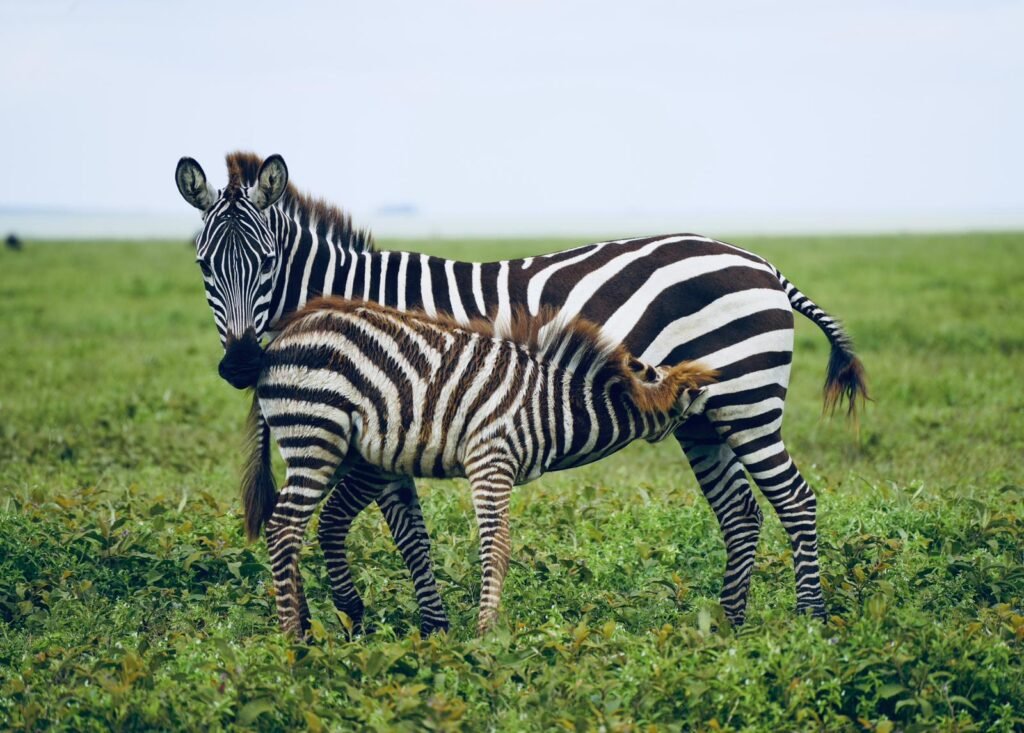
Zebras are important companions of the Great Migration. They often graze alongside wildebeest, taking advantage of different grass lengths and feeding opportunities.
Lions
Lions are among the most important predators in the Ndutu ecosystem. Their presence around the migrating herds creates opportunities to observe hunting behaviour, resting prides and territorial interactions.
Cheetahs
The open grasslands of Ndutu provide suitable hunting habitat for cheetahs. These landscapes offer excellent visibility for observing their movements and hunting strategies.
Spotted hyenas
Hyenas are highly adaptable predators and scavengers. Their presence around the herds makes them an important part of the ecological balance during calving season.
Other wildlife
Depending on the location and conditions, visitors may also encounter:
- African elephants.
- Giraffes.
- Elands.
- Thomson’s gazelles.
- Grant’s gazelles.
- Ostriches.
- Jackals.
- Different species of resident and migratory birds.
The experience is not limited to finding individual animals. It is about understanding how different species share the same ecosystem.
5. Why Is Ndutu Calving Season Special for Predator Viewing
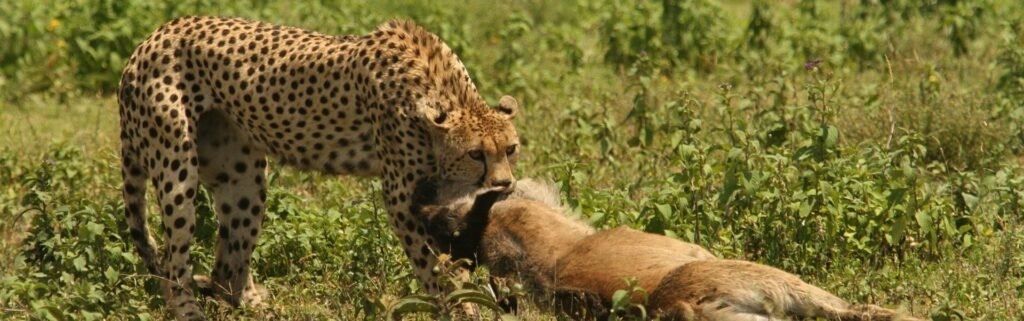
The arrival of hundreds of thousands of newborn wildebeest creates an important feeding opportunity for predators.
Newborn calves are particularly vulnerable during their first days of life. Although wildebeest calves can stand and move shortly after birth, they still face threats from predators and environmental challenges.
Predators such as lions, cheetahs and spotted hyenas take advantage of the seasonal concentration of prey.
This creates a fascinating relationship between reproduction and predation.
The wildebeest gather because the southern plains provide suitable grazing conditions. Predators gather because the concentration of prey creates hunting opportunities.
For wildlife photographers, researchers and nature enthusiasts, this is one of the most interesting aspects of the Southern Serengeti ecosystem.
What Makes Predator Viewing Different During Calving Season?
During other periods of the Great Migration, many visitors focus on the movement of herds and the dramatic river crossings.
Ndutu offers a different kind of wildlife experience.
Instead of concentrating on one major event, visitors can spend time observing different natural behaviours:
- A mother wildebeest keeping her newborn close.
- A cheetah scanning the open grassland for prey.
- Lions resting near areas occupied by migrating herds.
- Hyenas moving across the plains.
- Zebra and wildebeest grazing together.
It is important to remember that predator sightings and hunting events are never guaranteed. Their visibility depends on animal movements, weather, time of day and the behaviour of individual animals.
A good safari is not measured only by dramatic encounters. Understanding what is happening around you is equally important.
6. How Many Days Do You Need for a Ndutu Calving Season Safari?
The number of days you spend in Ndutu can significantly influence the quality of your safari.
A short visit may provide an introduction to the area, but travellers interested in observing calving activity and predator behaviour should allow enough time to explore different parts of the plains.
Our planning recommendation is to spend at least two nights in the Ndutu area, with three or four nights being a stronger option for travellers whose main objective is the calving season.
Here is a practical comparison:
| Safari duration | Best suited for |
|---|---|
| 1 day | Travellers with very limited time, already staying nearby |
| 2 days / 1 night | A short introduction to Ndutu |
| 3 days / 2 nights | A reasonable short calving-season safari |
| 4 days / 3 nights | Better flexibility for wildlife viewing |
| 5 days / 4 nights | Travellers prioritising migration and predator photography |
These are itinerary-planning recommendations, not guarantees of wildlife sightings.
Why Spend More Time in Ndutu?
The migrating herds do not remain in one location throughout the day or season.
Some areas may have large concentrations of wildebeest, while others may provide better opportunities for spotting predators.
Additional time allows your safari guide to explore different habitats, adjust game-drive routes and respond to wildlife information.
This flexibility is particularly valuable for photographers who may want to spend longer observing a specific animal rather than rushing between sightings.
7. Where Should You Stay During Ndutu Calving Season
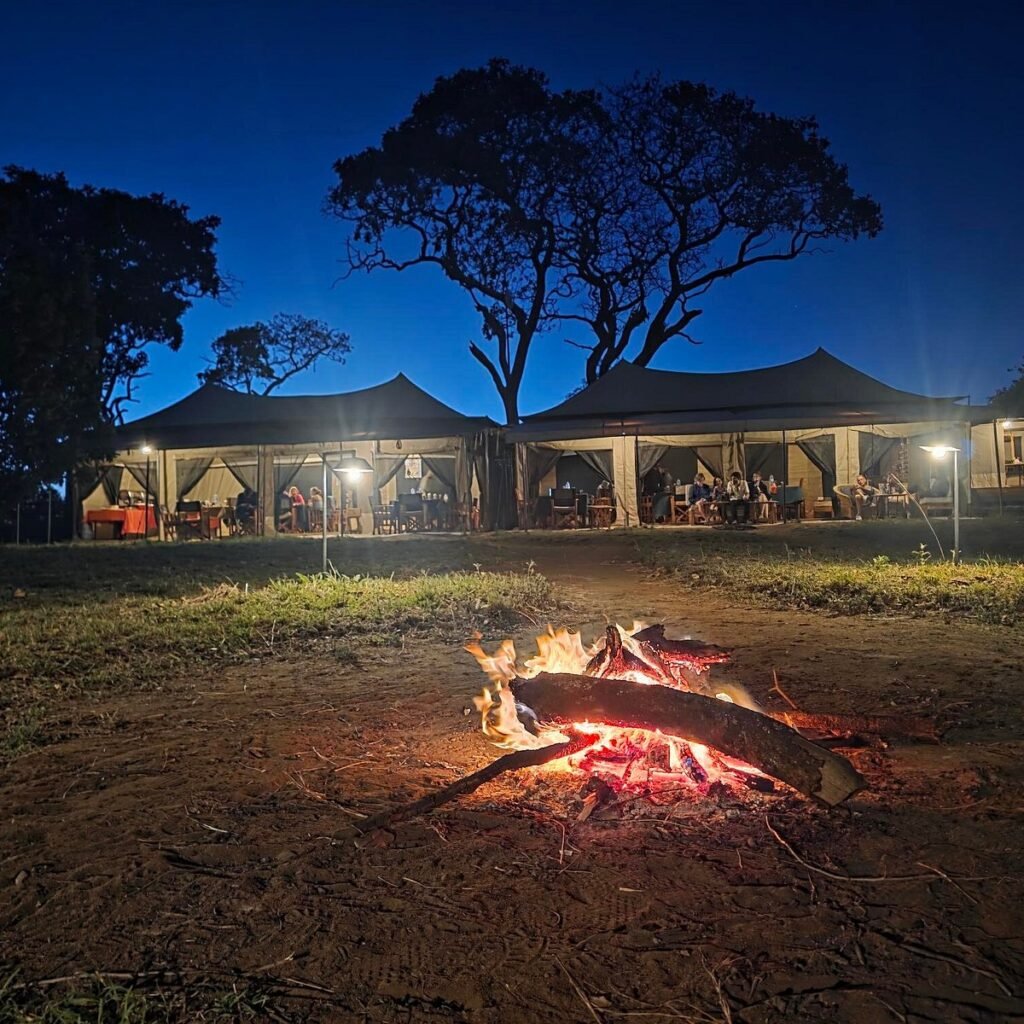
Accommodation is one of the most important decisions when planning a Ndutu Calving Season safari.
Unlike destinations with permanent accommodation concentrated around a central town, the Ndutu region has seasonal safari camps, tented camps and other accommodation options positioned to serve wildlife areas.
The best accommodation depends on your budget, preferred comfort level and the specific location of the migrating herds.
Seasonal Tented Camps
Seasonal tented camps are particularly suitable for travellers who want to stay close to the migration.
They offer a traditional safari atmosphere while providing access to the surrounding wildlife areas.
Luxury Tented Camps
Luxury tented camps offer a higher level of comfort, often combining spacious safari tents, private bathrooms, dining facilities and personalised hospitality.
They are suitable for couples, honeymooners and travellers looking for a more exclusive safari experience.
Permanent Lodges and Camps
Some travellers prefer established accommodation with more permanent facilities.
However, location should remain a priority. A beautiful lodge that requires long daily drives to reach the main wildlife concentrations may not be the most practical choice for a migration-focused safari.
Our recommendation: Choose accommodation based on its proximity to the expected wildlife movement, not simply its star rating or advertised luxury level.
Also, seasonal camps have limited availability. Travellers targeting February, particularly during popular holiday periods, should plan and reserve accommodation early.
8. How to Plan a Ndutu Calving Season Safari from Arusha
Most Northern Tanzania safari journeys begin in Arusha, the main tourism gateway for the Northern Circuit.
From Arusha, travellers can plan a road safari through the Ngorongoro area towards Ndutu, or arrange a fly-in safari depending on their budget and available connections.
Option 1: Road Safari from Arusha
A road safari offers an opportunity to experience the changing landscapes of Northern Tanzania.
The journey can be planned to include:
- Arusha.
- Ngorongoro Conservation Area.
- Ndutu.
- Central Serengeti, depending on the itinerary.
- Ngorongoro Crater, if included in the trip.
Travel times depend on road conditions, route selection, park access and the accommodation location.
A 4×4 safari vehicle is important, particularly during the green season when some roads can become muddy or difficult to navigate.
Option 2: Fly-in Safari
A fly-in safari can be suitable for travellers who want to reduce long road transfers or have limited holiday time.
Depending on the available seasonal flight schedule, visitors can fly towards the Ndutu area and continue their experience with a local safari vehicle and guide.
Flight availability, airstrip operations and baggage restrictions should be confirmed before booking.
Which Option Is Better?
A road safari is often suitable for travellers interested in a broader Northern Tanzania experience.
A fly-in safari may be more practical for luxury travellers or visitors with limited time.
Neither option is automatically better. The right choice depends on budget, schedule, accommodation and the number of days available.
9. What Is the Difference Between Ndutu Calving Season and Mara River Crossing Season?
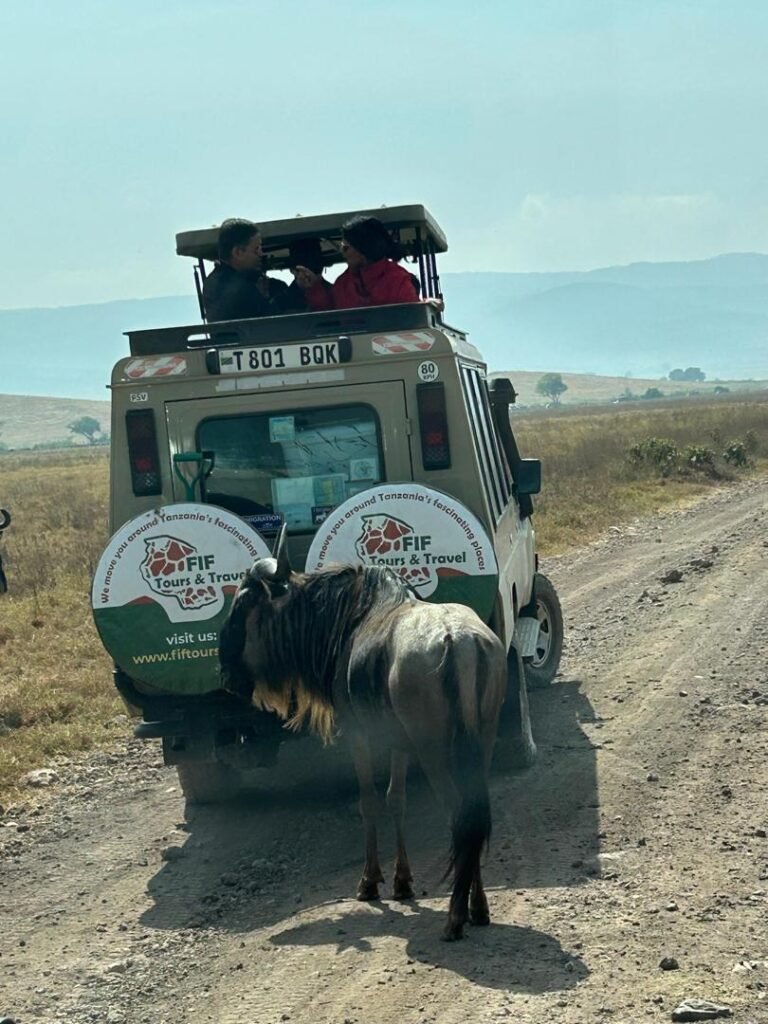
Both experiences belong to the Great Wildebeest Migration, but they offer very different wildlife encounters.
Travellers sometimes assume that seeing the Great Migration means witnessing the famous river crossings. In reality, the migration is a year-round movement involving different regions of the Serengeti ecosystem.
| Feature | Ndutu Calving Season | Mara River Crossing Season |
|---|---|---|
| Main period | January to March | Generally July to October |
| Main location | Southern Serengeti and Ndutu | Northern Serengeti |
| Main attraction | Wildebeest births and newborn calves | River crossings |
| Wildlife behaviour | Birthing, nursing, grazing and predator interactions | Herd movement and river crossings |
| Landscape | Green short-grass plains | Northern river landscapes and dry-season plains |
| Main photography interest | Newborn wildlife and predator behaviour | Large herds and dramatic river scenes |
Which Experience Should You Choose?
Choose Ndutu if you are interested in newborn wildlife, the beginning of life and predator-prey interactions.
Choose Northern Serengeti if your main objective is to experience the famous Mara River crossings.
If you have enough time and budget, you can also plan a longer Tanzania safari covering multiple migration regions at different times of the year.
The most important consideration is matching your travel dates to the experience you want to see.
10. What Is the Weather Like in Ndutu During Calving Season?
Ndutu Calving Season takes place during Tanzania’s green season.
The landscape changes following seasonal rainfall, with fresh grass covering large sections of the southern plains.
Visitors can expect a mixture of sunshine, clouds and occasional rain.
January and February are generally important months for green-season wildlife viewing, although weather conditions vary between years.
Rainfall has a direct influence on vegetation, grazing conditions and the movement of migrating herds.
For travellers, the green season provides several advantages:
- Beautiful green landscapes.
- Excellent opportunities for wildlife photography.
- Fresh vegetation and active birdlife.
- Seasonal concentrations of wildebeest.
- Opportunities to experience the Serengeti beyond its traditional dry-season image.
However, visitors should also prepare for occasional rain, muddy tracks and changing road conditions.
What Should You Pack?
For a Ndutu safari, we recommend:
- Lightweight neutral-coloured safari clothing.
- A warm jacket for early morning game drives.
- Comfortable walking shoes.
- A waterproof jacket.
- Sunscreen and sunglasses.
- A camera with suitable wildlife photography lenses.
- Binoculars.
- Personal medication and basic travel essentials.
A flexible packing approach is important because mornings, afternoons and evenings can feel different.
11. Is Ndutu Calving Season Suitable for First-Time Safari Travellers?
Yes. Ndutu can be an excellent introduction to Tanzania’s wildlife ecosystem.
First-time safari travellers can experience a remarkable combination of large herbivore herds, predators, beautiful landscapes and seasonal wildlife behaviour.
However, the experience is particularly rewarding when the safari is planned around realistic expectations.
You should understand that:
- Wildlife sightings are never guaranteed.
- The location of the herds changes.
- Weather can influence road conditions.
- Some game drives may involve longer distances.
- A knowledgeable safari guide plays an important role in interpreting animal behaviour.
For families, couples and first-time visitors, choosing comfortable accommodation and allowing enough time in the area can make the experience more enjoyable.
12. Why Book Your Ndutu Calving Season Safari with FIF Tours & Travel?
A successful migration safari requires more than choosing a destination and booking accommodation.
It requires an itinerary that considers wildlife movement, seasonal conditions, accommodation location, road access and the interests of each traveller.
At FIF Tours & Travel, we organise private Tanzania wildlife safaris, Northern Circuit adventures and tailor-made travel experiences.
Our approach is to understand what travellers want from their safari before recommending an itinerary.
For a Ndutu Calving Season safari, this means considering:
- Your preferred travel dates.
- The number of days available.
- Your accommodation preferences.
- Your budget and travel style.
- Whether you want to combine Ndutu with Central Serengeti or Ngorongoro Crater.
- Your interest in wildlife photography and predator viewing.
We can help you plan a journey that focuses on the Southern Serengeti during the calving period while allowing flexibility for the changing conditions of the migration.
Whether you are travelling as a couple, family, private group or wildlife photography enthusiast, the itinerary should be designed around your priorities.
Your Ndutu safari should be planned around the wildlife experience you want, not simply the number of destinations included in your itinerary.