Trekking Mount Meru is more than just a warm-up for Kilimanjaro — it’s a journey through untouched wilderness, a test of endurance, and a spiritual walk in the clouds. But to truly enjoy and conquer this climb, you’ll need more than courage. This is your complete guide to Mount Meru trek advice — combining fitness prep, gear tips, route insights, altitude safety, and real-world lessons from climbers.
Mount Meru might be shorter than Kilimanjaro, but don’t underestimate its steep trails and long summit push.
How to train for Mount Meru climb: Focus on cardio (stair climbs, hiking with weight), core stability, and endurance walks.
Best timeline to prepare: Start training at least 6–8 weeks in advance.
Mount Meru trek fitness training plan: Include 3–4 hikes per week, gradually increasing in duration and elevation gain.

Packing smart can make or break your experience. Weather conditions shift rapidly on the mountain.
Mount Meru trek packing list:
Waterproof boots with ankle support
Layered clothing for warm and cold zones
Daypack (25–35L) with rain cover
Trekking poles, headlamp, water purification tabs
Personal first aid kit
Mount Meru can only be climbed via the Momella Route, through Arusha National Park. All treks require a certified guide and ranger due to the presence of wildlife.
3-day vs 4-day Meru trek: The 3-day option is more physically intense with less acclimatization. The 4-day is ideal for first-time high-altitude trekkers.
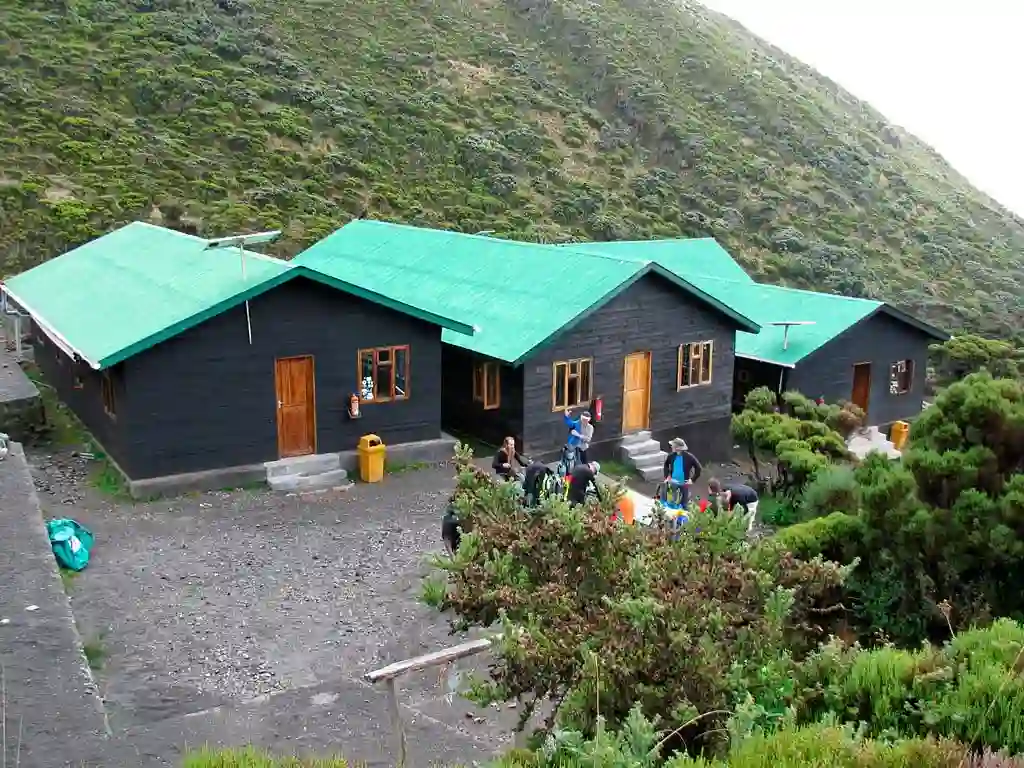
The summit, Socialist Peak, rises to 4,566m (14,980 ft). Acclimatization is key, especially on shorter itineraries.
How to prevent altitude sickness on Meru: Hydrate constantly, ascend slowly, and consider Diamox.
Symptoms: Headache, nausea, fatigue. Descend immediately if severe.
Mount Meru trek tips from experienced hikers:
Trek poles save your knees, especially on descent.
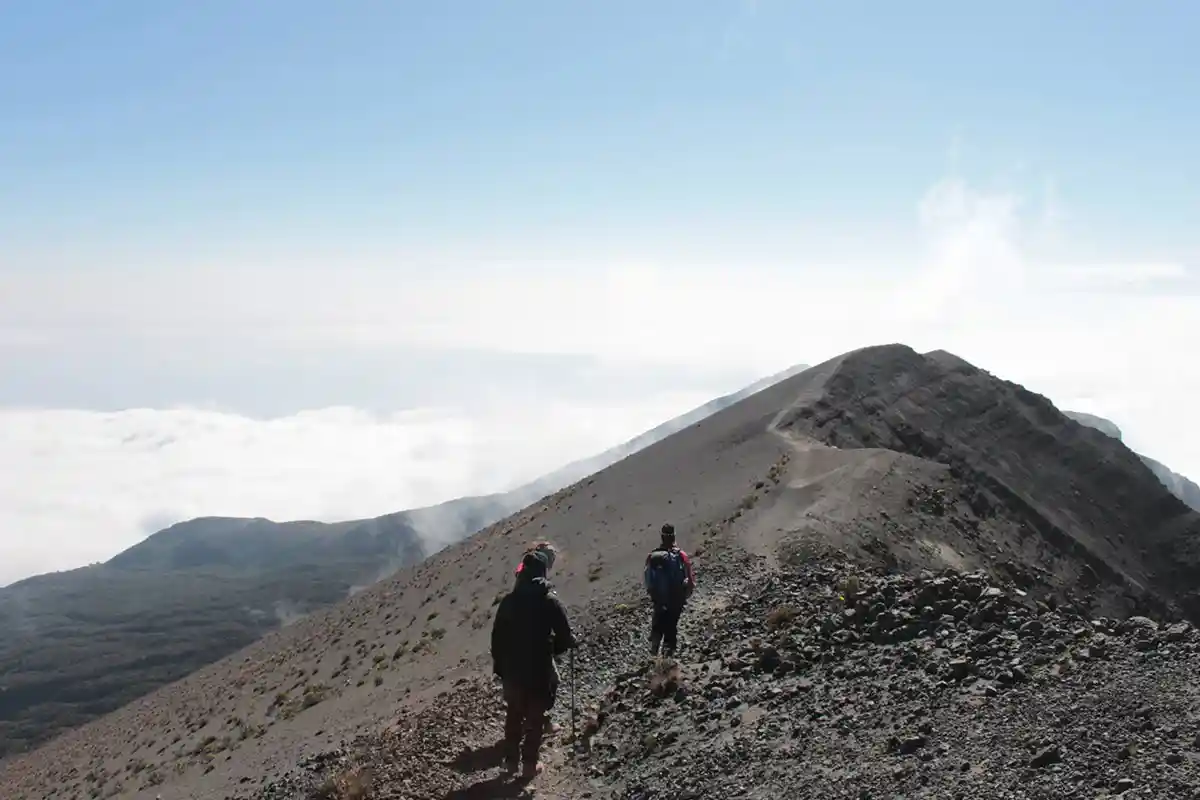
Start your summit night slow and steady — it’s steep.
Use earplugs if you’re a light sleeper in huts.
Is Mount Meru trek budget-friendly? Yes. Costs range from $700 to $1,200 for a 4-day climb.
Do I need a licensed operator? Yes. Park regulations require trekking with a registered guide and armed ranger.
Tipping on Mount Meru: $10–20/day for guides, $5–10/day for porters.
The beauty of Mount Meru lies not just in its trails, but in how it changes you. With the right training, preparation, and mindset, this trek becomes more than a mountain — it becomes a memory that lives with you forever.
👉 Ready to climb smart and safe? [Talk to a Trek Planner] and get personalized Mount Meru trek advice today.
Unlock the door to Tanzania’s breathtaking marvels with us. Our tailored tours offer an exclusive gateway to the heart of Africa’s treasures. Immerse yourself in the untamed beauty of the Serengeti, the cultural richness of local communities, and the pristine shores of Zanzibar. Each journey is crafted to resonate with your wanderlust, ensuring that every step you take in this enchanting land becomes a memory you’ll treasure forever.
FIF Tours and Travel
Typically replies within minutes
Any questions related to Trek Advice?
WhatsApp Us
🟢 Online | Privacy policy
WhatsApp us