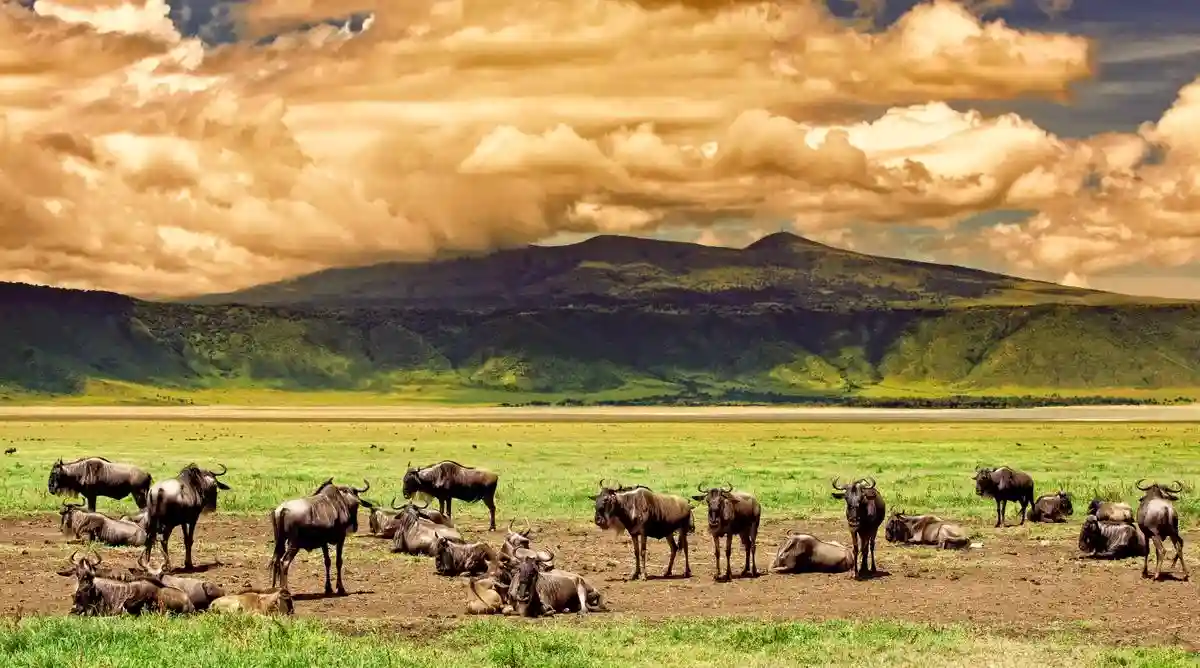
Ngorongoro Crater
- Jan: good. Explore the Ngorongoro Crater, a natural enclosure teeming with diverse wildlife.
- Feb: good. Explore the world's largest intact volcanic caldera, home to diverse wildlife.
- Mar: good. Explore the unique caldera teeming with wildlife.
- Apr: good. Spot the Big Five in the Ngorongoro Crater, surrounded by a lush ecosystem.
- May: good. Experience Big Five encounters in a unique crater.
- Jun: good. June is perfect for spotting the Big Five in the Ngorongoro Crater.
- Jul: good. July is ideal for spotting the Big Five in the Ngorongoro Crater.
- Aug: good. Experience the Big Five and breathtaking crater views.
- Sep: good. Encounter the Big Five in the Ngorongoro Crater amid comfortable conditions.
- Oct: good. October continues to provide remarkable opportunities for Big Five sightings in the Ngorongoro Crater.
- Nov: good. November invites you to encounter the Big Five in the Ngorongoro Crater.
- Dec: good. December invites you to spot the Big Five in the Ngorongoro Crater amid mild weather.
Why Visit Ngorongoro Conservation Area?
Discover Exceptional Wildlife in a Remarkable Volcanic Landscape
Few places in Tanzania bring wildlife and dramatic natural scenery together quite like the Ngorongoro Conservation Area. At its heart lies the Ngorongoro Crater, a vast volcanic caldera surrounded by steep forested walls and highland landscapes. From the crater rim, the view opens onto an extraordinary natural setting where open grasslands, seasonal wetlands, woodland and freshwater areas support a remarkable concentration of wildlife.
The crater floor is home to an impressive variety of animals throughout the year. Lions, elephants, buffaloes, zebras, wildebeest and spotted hyenas are among the species regularly encountered during game drives. Ngorongoro is also one of the important places in Tanzania to look for the endangered black rhinoceros, although sightings are never guaranteed. This concentration of wildlife within a relatively compact landscape makes the crater particularly rewarding for travellers hoping to experience Tanzania’s wildlife in a limited amount of time.
What makes a Ngorongoro safari especially memorable is the relationship between the landscape and the wildlife. Animals move across the open crater floor against a backdrop of steep volcanic walls, while patches of woodland and wetland create different habitats within the caldera. Beyond the game viewing, the surrounding highlands offer a completely different perspective, with cooler mountain air, forested slopes and expansive views across the conservation area.
For travellers exploring northern Tanzania, Ngorongoro is also a natural addition to a wider safari itinerary. Its location makes it easy to combine with Serengeti National Park, Tarangire National Park and Lake Manyara National Park. Whether experienced as a dedicated crater game drive or as part of a longer northern circuit safari, Ngorongoro offers a distinctive combination of wildlife, scenery and natural history.
Explore Culture, Human History and the Wider Conservation Area
The Ngorongoro Conservation Area extends far beyond the famous crater, covering approximately 8,292 square kilometres of diverse landscapes in northern Tanzania. Its scenery ranges from highland grasslands and volcanic mountains to savannah woodland, forest and open plains. Established in 1959, the conservation area follows a distinctive multiple land-use approach, where wildlife conservation exists alongside the traditional pastoral livelihoods of the Maasai people.
This relationship between people, wildlife and the natural environment is an important part of what makes Ngorongoro different from Tanzania’s national parks. Maasai communities continue to live within the conservation area, maintaining pastoral traditions that have shaped the landscape for generations. Visitors can gain a deeper understanding of Maasai culture, traditional livestock keeping and the relationship between local communities and their surroundings through appropriately arranged cultural experiences.
Ngorongoro also holds exceptional importance in understanding human origins. Olduvai Gorge, located within the wider conservation area, is one of the world’s most significant archaeological and paleoanthropological sites. Discoveries of early human remains and stone tools have contributed greatly to our understanding of human evolution and the development of early societies. For travelers interested in archaeology and history, a visit adds an entirely different dimension to the safari experience.
The wider conservation area also includes remarkable volcanic formations and highland scenery that deserve attention beyond the crater itself. From the open plains to the forested slopes and archaeological landscapes, each part reveals a different side of this remarkable region.
Ngorongoro fits naturally into a northern Tanzania safari, particularly when combined with Serengeti for its vast wildlife plains and Great Migration, Tarangire for its elephant populations and iconic baobab trees, or Lake Manyara for its varied habitats and birdlife. Together, these destinations create a richer journey through northern Tanzania, connecting wildlife encounters with natural landscapes, local culture and some of the most important chapters in human history.
Safaris and day trips to Ngorongoro Crater
2-Day Budget Tanzania (Tarangire & Ngorongoro Crater) Safari
- Jan: good. Ngorongoro Crater: Explore the Ngorongoro Crater, a natural enclosure teeming with diverse wildlife.
- Feb: good. Ngorongoro Crater: Explore the world's largest intact volcanic caldera, home to diverse wildlife.
- Mar: prime time. Ngorongoro Crater: Explore the unique caldera teeming with wildlife.
- Apr: prime time. Ngorongoro Crater: Spot the Big Five in the Ngorongoro Crater, surrounded by a lush ecosystem.
- May: prime time. Ngorongoro Crater: Experience Big Five encounters in a unique crater.
- Jun: good. Ngorongoro Crater: June is perfect for spotting the Big Five in the Ngorongoro Crater.
- Jul: good. Ngorongoro Crater: July is ideal for spotting the Big Five in the Ngorongoro Crater.
- Aug: good. Ngorongoro Crater: Experience the Big Five and breathtaking crater views.
- Sep: good. Ngorongoro Crater: Encounter the Big Five in the Ngorongoro Crater amid comfortable conditions.
- Oct: good. Ngorongoro Crater: October continues to provide remarkable opportunities for Big Five sightings in the Ngorongoro Crater.
- Nov: prime time. Ngorongoro Crater: November invites you to encounter the Big Five in the Ngorongoro Crater.
- Dec: prime time. Ngorongoro Crater: December invites you to spot the Big Five in the Ngorongoro Crater amid mild weather.
3-Day Mid-Range Serengeti & Ngorongoro Safari (Wildebeest Calving)
- Jan: prime time
- Feb: prime time
- Mar: prime time
- Apr: quieter
- May: quieter
- Jun: quieter
- Jul: quieter
- Aug: quieter
- Sep: quieter
- Oct: quieter
- Nov: quieter
- Dec: prime time
3-Day Budget Tanzania (Serengeti & Ngorongoro Crater) Safari
- Jan: good. Ngorongoro Crater: Explore the Ngorongoro Crater, a natural enclosure teeming with diverse wildlife.
- Feb: good. Ngorongoro Crater: Explore the world's largest intact volcanic caldera, home to diverse wildlife.
- Mar: good. Ngorongoro Crater: Explore the unique caldera teeming with wildlife.
- Apr: prime time. Ngorongoro Crater: Spot the Big Five in the Ngorongoro Crater, surrounded by a lush ecosystem.
- May: prime time. Ngorongoro Crater: Experience Big Five encounters in a unique crater.
- Jun: good. Ngorongoro Crater: June is perfect for spotting the Big Five in the Ngorongoro Crater.
- Jul: good. Ngorongoro Crater: July is ideal for spotting the Big Five in the Ngorongoro Crater.
- Aug: good. Ngorongoro Crater: Experience the Big Five and breathtaking crater views.
- Sep: good. Ngorongoro Crater: Encounter the Big Five in the Ngorongoro Crater amid comfortable conditions.
- Oct: good. Ngorongoro Crater: October continues to provide remarkable opportunities for Big Five sightings in the Ngorongoro Crater.
- Nov: prime time. Ngorongoro Crater: November invites you to encounter the Big Five in the Ngorongoro Crater.
- Dec: prime time. Ngorongoro Crater: December invites you to spot the Big Five in the Ngorongoro Crater amid mild weather.
3-Day Budget Tanzania Safari (Serengeti & Ngorongoro Crater)
- Jan: good. Ngorongoro Crater: Explore the Ngorongoro Crater, a natural enclosure teeming with diverse wildlife.
- Feb: good. Ngorongoro Crater: Explore the world's largest intact volcanic caldera, home to diverse wildlife.
- Mar: good. Ngorongoro Crater: Explore the unique caldera teeming with wildlife.
- Apr: prime time. Ngorongoro Crater: Spot the Big Five in the Ngorongoro Crater, surrounded by a lush ecosystem.
- May: prime time. Ngorongoro Crater: Experience Big Five encounters in a unique crater.
- Jun: good. Ngorongoro Crater: June is perfect for spotting the Big Five in the Ngorongoro Crater.
- Jul: good. Ngorongoro Crater: July is ideal for spotting the Big Five in the Ngorongoro Crater.
- Aug: good. Ngorongoro Crater: Experience the Big Five and breathtaking crater views.
- Sep: good. Ngorongoro Crater: Encounter the Big Five in the Ngorongoro Crater amid comfortable conditions.
- Oct: good. Ngorongoro Crater: October continues to provide remarkable opportunities for Big Five sightings in the Ngorongoro Crater.
- Nov: prime time. Ngorongoro Crater: November invites you to encounter the Big Five in the Ngorongoro Crater.
- Dec: prime time. Ngorongoro Crater: December invites you to spot the Big Five in the Ngorongoro Crater amid mild weather.
4-Day Mid-Range Northern Serengeti River Crossing Safari Experience
- Jan: quieter
- Feb: quieter
- Mar: quieter
- Apr: quieter
- May: quieter
- Jun: quieter
- Jul: prime time
- Aug: prime time
- Sep: prime time
- Oct: prime time
- Nov: quieter
- Dec: quieter
5-Day Budget Northern Tanzania Finest Safari
- Jan: good. Ngorongoro Crater: Explore the Ngorongoro Crater, a natural enclosure teeming with diverse wildlife.
- Feb: good. Ngorongoro Crater: Explore the world's largest intact volcanic caldera, home to diverse wildlife.
- Mar: prime time. Ngorongoro Crater: Explore the unique caldera teeming with wildlife.
- Apr: prime time. Ngorongoro Crater: Spot the Big Five in the Ngorongoro Crater, surrounded by a lush ecosystem.
- May: prime time. Ngorongoro Crater: Experience Big Five encounters in a unique crater.
- Jun: good. Ngorongoro Crater: June is perfect for spotting the Big Five in the Ngorongoro Crater.
- Jul: good. Ngorongoro Crater: July is ideal for spotting the Big Five in the Ngorongoro Crater.
- Aug: good. Ngorongoro Crater: Experience the Big Five and breathtaking crater views.
- Sep: good. Ngorongoro Crater: Encounter the Big Five in the Ngorongoro Crater amid comfortable conditions.
- Oct: good. Ngorongoro Crater: October continues to provide remarkable opportunities for Big Five sightings in the Ngorongoro Crater.
- Nov: prime time. Ngorongoro Crater: November invites you to encounter the Big Five in the Ngorongoro Crater.
- Dec: prime time. Ngorongoro Crater: December invites you to spot the Big Five in the Ngorongoro Crater amid mild weather.
Questions about Ngorongoro Crater
How do I get to Ngorongoro Crater?
About 3 to 4 hours by road from Arusha to the crater rim. Most guests sleep in Karatu or on the rim and go down early in the morning.
How long should I spend at Ngorongoro Crater?
A crater descent takes about half a day, so one or two nights nearby is usual.
Which FIF Tours trips visit Ngorongoro Crater?
12 of our itineraries visit Ngorongoro Crater, for example 2-Day Budget Tanzania (Tarangire & Ngorongoro Crater) Safari, 3-Day Mid-Range Serengeti & Ngorongoro Safari (Wildebeest Calving) and 3-Day Budget Tanzania (Serengeti & Ngorongoro Crater) Safari. Every one can be changed to fit your dates and budget.